Monday, July 20, 2020

U.S. Lighthouse Society Podcast "Light Hearted" episode 72 – Sean Todd, Mount Desert Rock, Maine

More than 20 miles from the nearest port at Mount Desert Island in Maine, low-lying, wave-swept Mount Desert Rock is only about 17 feet above sea level at its highest point. Congress appropriated $5,000 for a lighthouse on Mount Desert Rock on March 2, 1829, to aid mariners heading to Frenchman and Blue Hill Bays from the south. The light went into operation on August 25, 1830. The structure weathered many storms before being replaced by a new 58-foot granite tower in 1847. The new tower was designed by the noted architect Alexander Parris.

Mount Desert Rock Light Station in 2002. Photo by Jeremy D’Entremont.

 The station was automated in late 1977. The light station was then leased to Bar Harbor’s College of the Atlantic for use as a whale watching station. Under the Maine Lights Program, Mount Desert Rock Light Station, along with Great Duck Island Light Station, became the property of the College of the Atlantic in 1998.

The 2019 Marine Mammal class pictured at Mount Desert Rock. In this class, in addition to performing marine mammal research, students learn to run the station.    (College of the Atlantic)
Sean Todd (College of the Atlantic)

Sean Todd is the Steven K. Katona Chair in Marine Sciences at College of the Atlantic in Bar Harbor, Maine, and he also directs Allied Whale, the college’s marine mammal research program. He spent ten years in Newfoundland as part of the Whale Disentanglement team, a group that releases large entangled whales from fishing gear. In Maine he is trained as part of a first response team that performs a similar function. Sean also acts as a professional guide, including 14 seasons in the Antarctic and 11 seasons in the Canadian sub-Arctic and Arctic. He created, wrote, and stars in the award-winningLife in the World’s Oceans, a 30-part DVD series available from TheGreatCourses.com.


Use this player to listen to the podcast:


Monday, July 13, 2020

U.S. Lighthouse podcast "Light Hearted" episode 71 – John Anderson, Great Duck Island, Maine

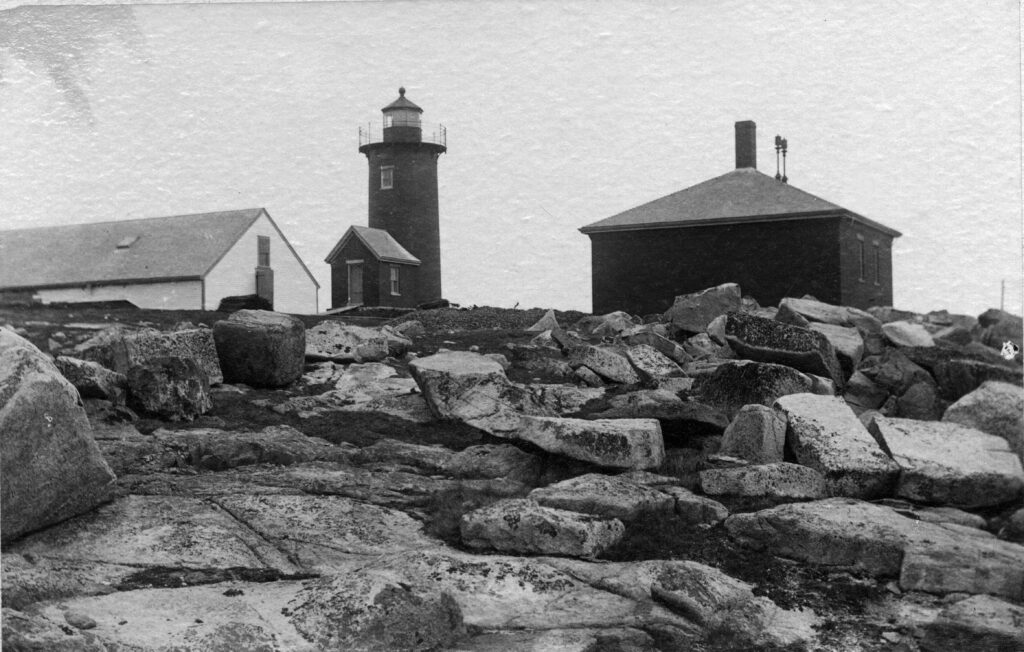
Great Duck Island is more than 200 acres in size and about nine miles south of the much larger Mount Desert Island. The Lighthouse Board recommended a light station on the island in 1885, and funds were appropriated in 1889. The light was established on December 31, 1890, with a 42-foot-tall cylindrical brick tower, three keepers’ dwellings, a fog signal building, and other outbuildings.

Early photo of Great Duck Island Lighthouse; fog signal building to the right.
National Archives image 26-LG-2-32F.

The light was automated in 1986 and the fourth-order Fresnel lens was replaced by a modern optic. The light remains an active aid to navigation, while most of the rest of the island was purchased by the Maine Chapter of the Nature Conservancy in 1984.

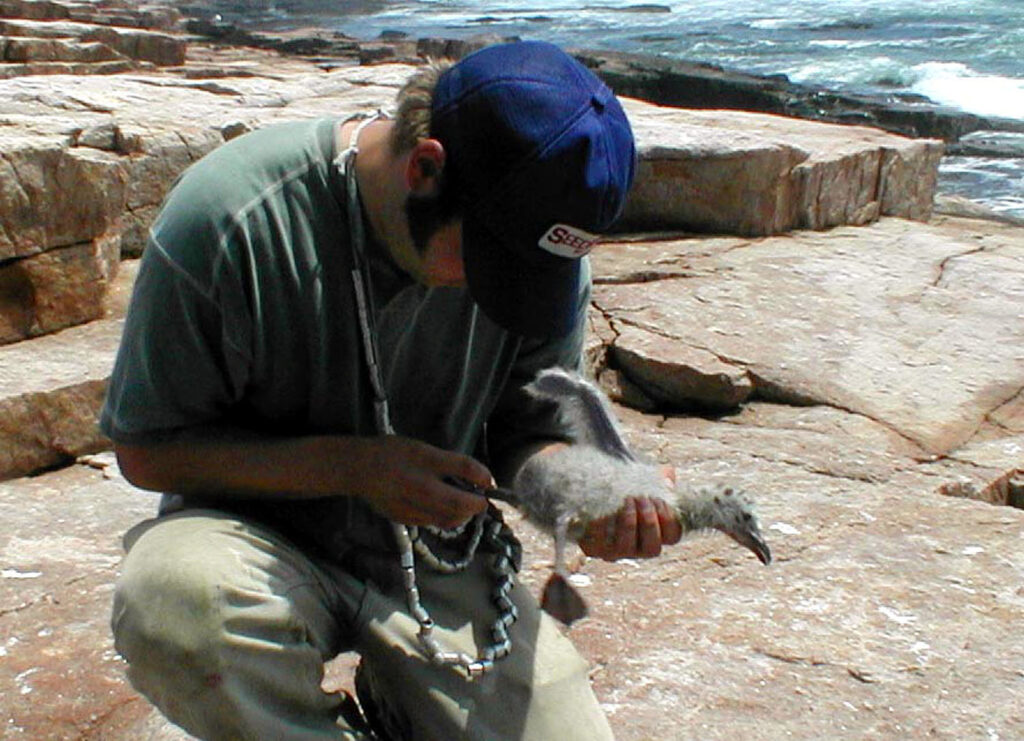
A student bands a gull chick at Great Duck Island


In 1998 Great Duck Island Light Station, along with Mount Desert Rock Light Station, became the property of Bar Harbor’s College of the Atlantic under the Maine Lights Program. College of the Atlantic owns approximately 12 acres on Great Duck Island, consisting of the one remaining keeper’s house, two boathouses, and the lighthouse. Students and staff from the college now live in the former keeper’s dwelling much of the year. The College of the Atlantic’s ongoing research projects on the island include the monitoring of the large nesting gull population, as well as detailed study of black guillemots and the nocturnal Leach’s storm petrel.

John Anderson (COA)
John Anderson has been a professor at College of the Atlantic for more than 30 years. He teaches zoology, ecology, and animal behavior, and he’s a W.H. Drury Professor of Ecology and Natural History. He’s a New Zealander by nationality, British by upbringing, and has spent time in the UK, Europe, and the western U.S.

His field research centers around Great Duck Island. He says that he’s interested in the intersection between natural history and human history in relation to long-term ecological processes.


Monday, July 6, 2020

U.S. Lighthouse Society Podcast "Light Hearted" episode 70 - July 6, 2020

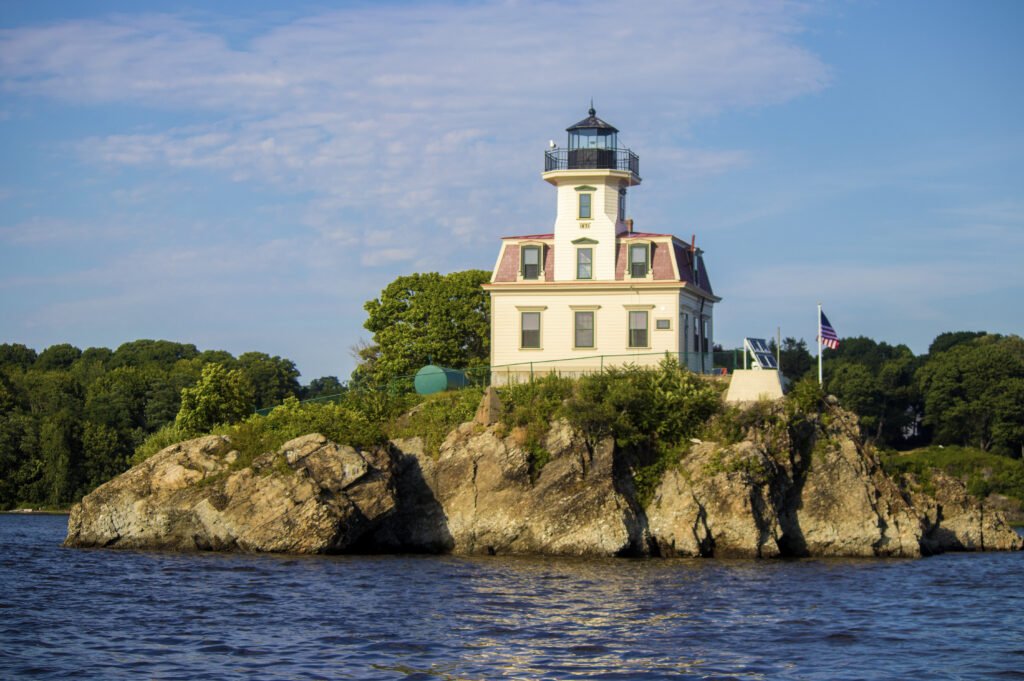
Pomham Rocks is a tiny island in the Providence River, about 800 feet from the east shore of the Riverside section of East Providence, Rhode Island. With increased shipping traffic heading toward Providence in the 1800s, Pomham Rocks was an obvious place to establish a navigational aid, and funds were appropriated in 1870. A wooden dwelling with a mansard roof was built on a granite foundation with a hexagonal lighthouse tower on the front center of the building. It was first lighted on December 1, 1871.

The lighthouse was discontinued in 1974 and was replaced by an automatic light on a skeleton tower. In 1980 the General Services Administration sold the property to the Mobil Oil Company, now Exxon Mobil, which has a large refinery and terminal near the lighthouse. Exxon Mobil eventually leased the historic structure at no cost to the American Lighthouse Foundation. A new chapter of the Foundation, the Friends of Pomham Rocks Lighthouse, was announced.

A restoration of the exterior of the building was completed in early 2006, and the navigational light was returned to the lighthouse. Then, in the spring of 2010, Exxon Mobil donated the lighthouse to the American Lighthouse Foundation. Recent work has included the construction of new docking facilities, restoration of the oil house, installation of new fencing, restoration of the lighthouse windows, and restoration of the interior.

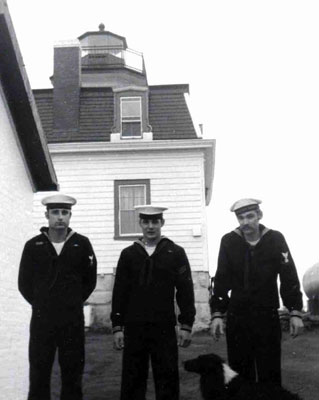
Dennis Tardiff (left) was the last
USCG officer in charge at Pomham Rocks Light Station.
(Photo courtesy of Dennis Tardiff)
Dennis Tardiff arrived at Pomham Rocks in April 1971 as a 19-year-old Coast Guard fireman. He left Pomham at the age of 22 as a third class Petty Officer. As one of the last Coast Guard keepers at the station, Dennis lowered the flag on June 5, 1974, when the light was decommissioned. More than four decades after he left Pomham Rocks, Dennis became reacquainted with the lighthouse when he became involved with the restoration project in 2016. Dennis is now the chairperson of the Friends of Pomham Rocks Lighthouse. He was recognized for his efforts with a 2018 volunteerism award from the American Lighthouse Foundation. In this interview, Dennis talks about his days as a Coast Guard light keeper and about the preservation of this jewel among New England lighthouses.


Wednesday, January 8, 2020

Special Edition of "Light Hearted" - Maine lighthouse keeper Ernie DeRaps


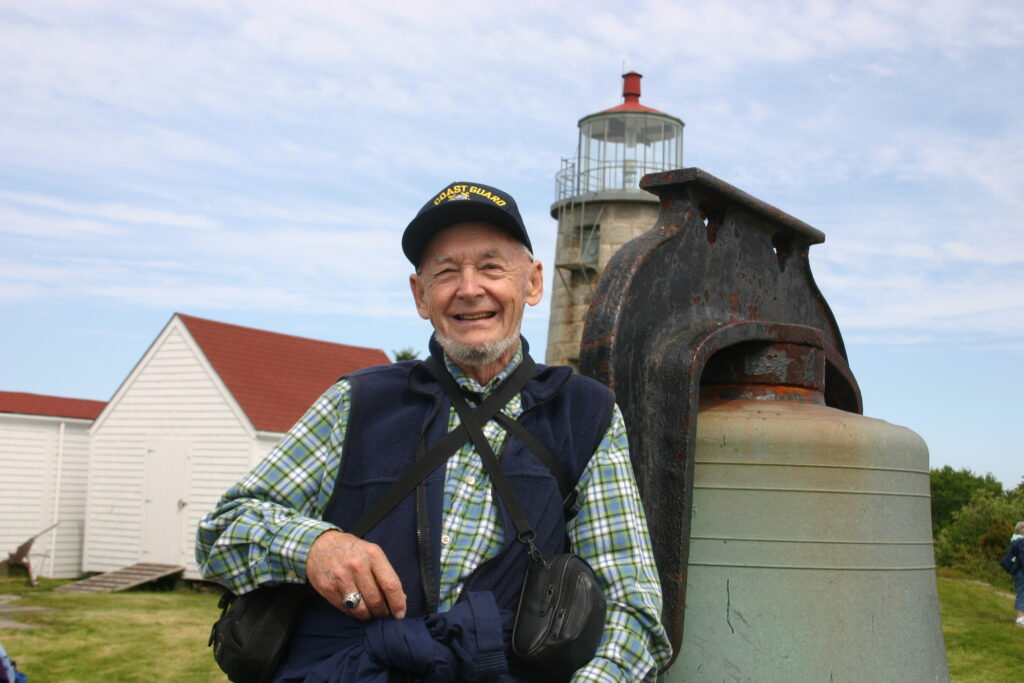
Ernie DeRaps at Monhegan Lighthouse in 2007. Photo by Jeremy D’Entremont.
This is a special edition of Light Hearted, featuring an extended interview with a former lighthouse keeper. Ernie DeRaps, a native Mainer, spent several years in the 1950s and ‘60s as a Coast Guard lighthouse keeper at four Maine lighthouses – Monhegan, Fort Point, Heron Neck, and Browns Head. After retirement he took up painting at the age of 80.  Ernie is now in his early 90s, and he has completed portraits of all 65 lighthouses on the Maine coast.


L to R: Jeremy D’Entremont, Ernie DeRaps, Bob Trapani, Jr., in February 2019
A book by Ernie DeRaps and his wife, Pauline, was published by Foghorn Publishing in 2006. Ernie’s half of the book was called Lighthouse Keeping. If you turn the book over and upside down, the other half of the book, by Pauline Fitzgerald DeRaps, was called Light Housekeeping.
Ernie and Pauline were married for 64 years and had six children. Pauline passed away in 2015 and is, of course, greatly missed, but Ernie is staying busy with his painting, as well as his children, nine grandchildren, and two great grandchildren. Ernie celebrates his 92nd birthday this month.
The book   Lighthouse Keeping / Light Housekeeping by Ernie and Pauline DeRaps is available from Foghorn Publishing. You can see some of Ernie’s paintings of Maine lighthouses at pigmentartstudio.com. You’ll see his Lighthouses of the Maine Coast series as well as some nature paintings and seascapes.


Ernie’s painting of Pemaquid Point Lighthouse

Note from producer/host Jeremy D’Entremont
:      I visited Ernie DeRaps at his home in Richmond, Maine, last February. With me was my friend Bob Trapani, Jr., executive director of the American Lighthouse Foundation. Bob took part in the conversation with Ernie. The reason I waited until now to post this interview is that there was a problem with the sound. We recorded the conversation at Ernie’s kitchen table. As we spoke, Ernie kept tapping his fingers on the table. I was aware of it at the time, but I didn’t ask him to stop because I was afraid it might interrupt his thought process. I didn’t think the sound the tapping was making was very significant. It wasn’t until I listened to the recording later that I realized the tapping went right to the microphone stands and was recorded as a loud “boing” every time. For that reason, I shelved the interview for almost a year. But I recently listened to it again and I decided that it would be best to release it in spite of the problem. You can hear everything that’s said clearly, and Ernie’s great to listen to and I hated the thought of not using it because of a few little “boings.”
Listen here:

Tuesday, August 6, 2019

Light Hearted podcast Ep 19 – Russ Rowlett of The Lighthouse Directory; Jeff Zappen, Waterways Management Specialist in WA

Host Jeremy D’Entremont is joined by co-host Michelle Jewell Shaw. When Russ Rowlett was growing up in Richmond, Virginia, his only exposure to lighthouses was climbing the Old Cape Henry Lighthouse when his family vacationed at Virginia Beach. Russ started his web site, The Lighthouse Directory, in 1999, and it kept growing until, by 2009, it covered the whole world. It’s one of the most useful lighthouse information sites on the Internet, and Russ is the first guest on this episode of Light Hearted.

Bob Muller was the founding president of the Long Island Chapter of the U.S. Lighthouse Society in New York. He has been involved in lighthouse research, education, lecturing, and preservation for twenty years. In this first installment of The (non-political) Muller Report, Bob updates us on the restoration efforts for Stepping Stones Lighthouse, the westernmost lighthouse in Long Island Sound, a project in which Bob has been personally involved.

In a history segment, Michelle and Jeremy relate the story of Willie Williams, longtime (1883-1911) keeper of Maine’s remote Boon Island Light Station, who said in retirement: “There were days when I first went on the station that I could not get away from the idea that I was the same as locked up in a cell.”

William C. Williams, courtesy of Jim Claflin


The next interview is Jeff Zappen, who retired in December 2018 after 28 years as a Chief Warrant Officer in the U.S. Coast Guard. Jeff is still working for the Coast Guard as a Waterways Management Specialist in Port Orchard, Washington. Jeremy interviewed Jeff during a visit to the U.S. Lighthouse Society’s headquarters in Hansville, Washington, last January. The conversation involves the evolving nature of the Coast Guard’s role with America’s lighthouses and other aids to navigation.

Tuesday, July 2, 2019

U.S. Lighthouse Society podcast "Light Hearted" episode 9

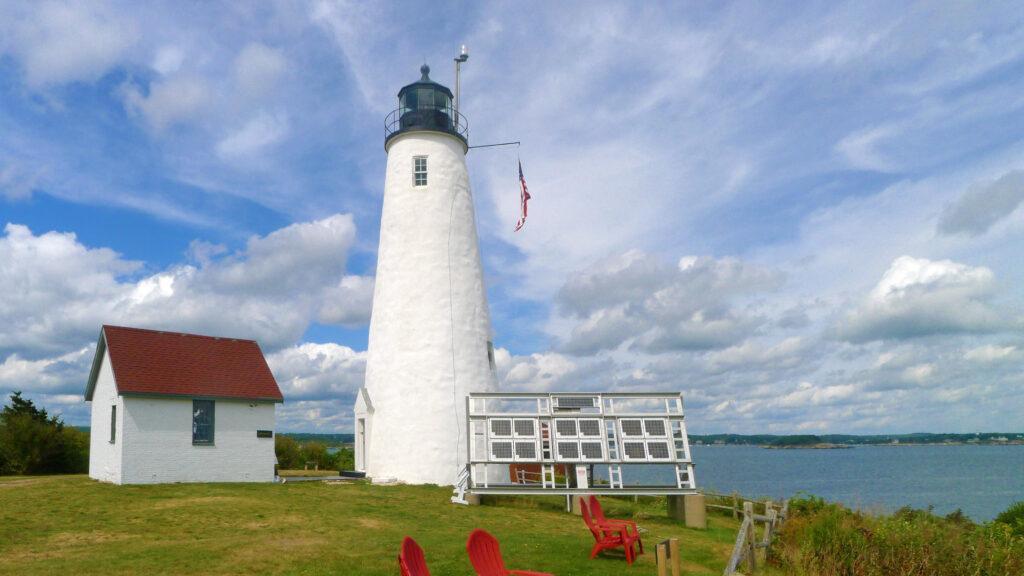
Host Jeremy D’Entremont interviews Annie C. Harris, director of Essex Heritage. The non-profit organization promotes the cultural heritage of Essex County, Massachusetts, and owns the Bakers Island Light Station in Salem. The station consists of an 1820 lighthouse tower, two keepers’ houses, and outbuildings. Through Essex Heritage, tours of the historic light station are available, and also overnight stays.
Bakers Island Lighthouse, photo by Jeremy D'Entremont
In the history segment, Jeremy and co-host Cindy Johnson continue the saga of the lighthouses on the Eddystone Rocks off Plymouth, England, with the story of Rudyard’s 1709 tower and Smeaton’s 1759 tower, which represented a major step forward in the construction of wave-swept lighthouses.

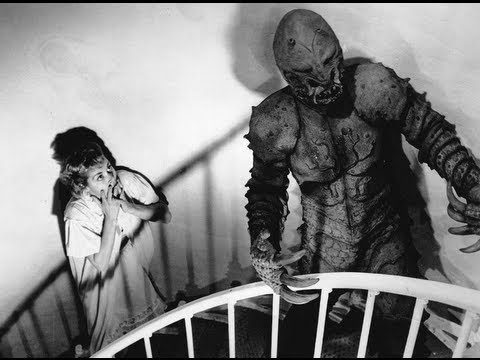
Jeremy and Cindy then discuss the 1959 horror film The Monster of Piedras Blancas, which was shot largely at California’s Point Conception Light Station. Jeremy recalls a phone interview with one of the movie’s stars, Jeanne Carmen.

From The Monster of Piedras Blancas

Click here to hear the program.

Monday, June 24, 2019

Light Hearted Ep 7 – Nick Korstad, Big Bay Point, Michigan; Erin Corra, Lime Kiln, Washington


This image has an empty alt attribute; its file name is d73c5670-87bd-4dcf-bc8d-e93216ead9f9.jpg
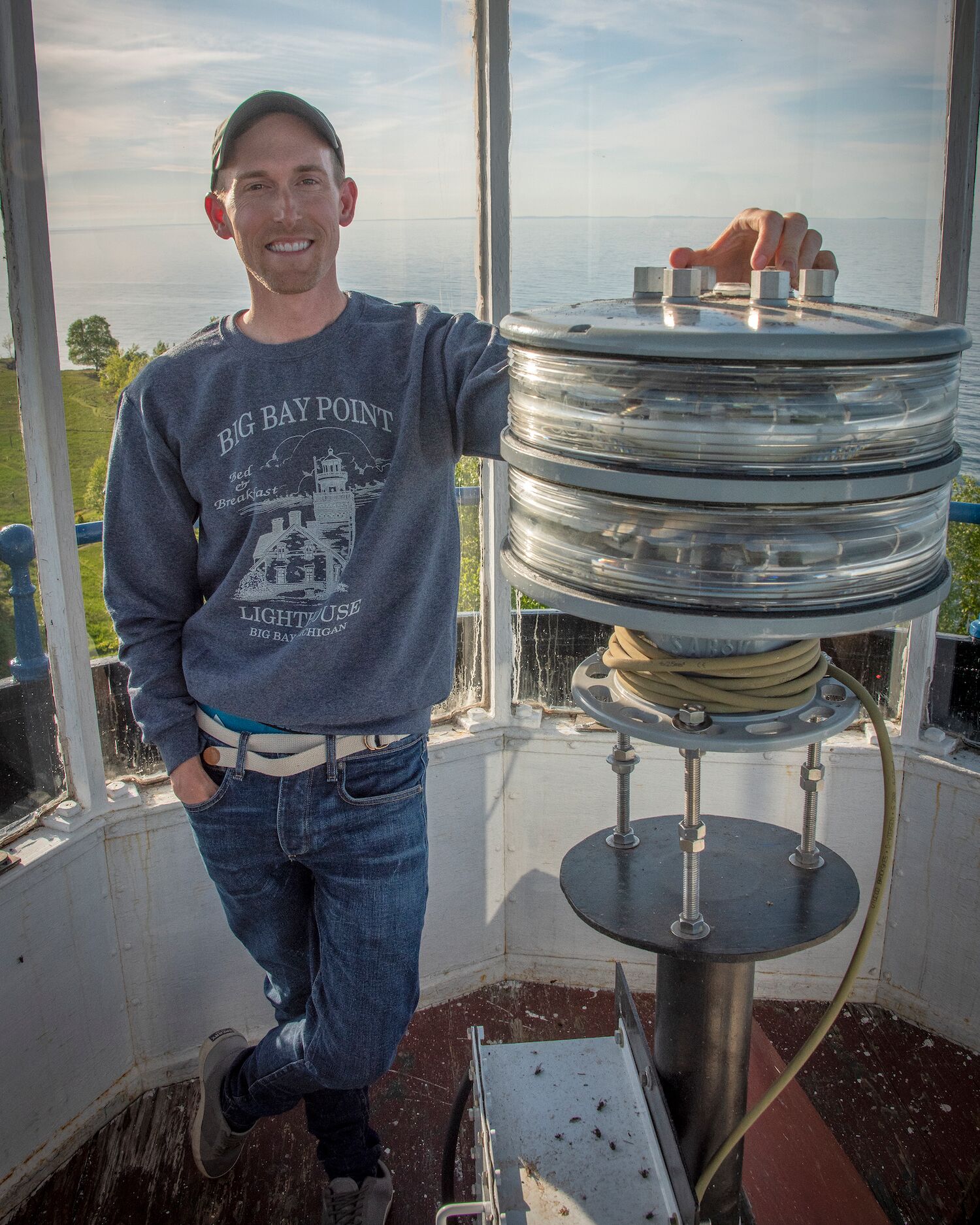
Nick Korstad
This image has an empty alt attribute; its file name is P8240027-1024x768.jpg
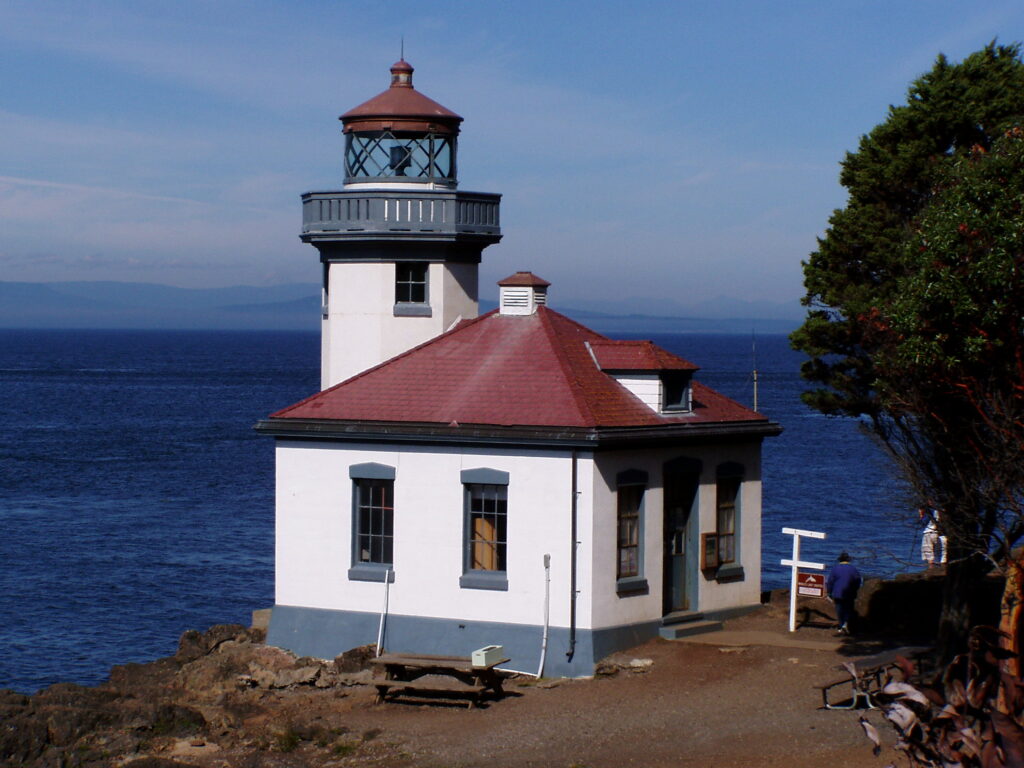
Lime Kiln Lighthouse


Jeremy D'Entremont and Michelle Jewell Shaw come to you from the Portsmouth Public Library. The feature interview is with Nick Korstad, owner of the Big Bay Point Lighthouse B&B in Michigan. Prior to purchasing Big Bay Point Lighthouse, Nick bought and restored Borden Flats Lighthouse in Fall River, Massachusetts, a project for which he was featured on several national TV shows and received a “Keeper of the Light” award from the American Lighthouse Foundation.

The history segment is all about the Cordouan Lighthouse in France, which was built between 1584 and 1611. Not only is it the oldest lighthouse in France and one of the oldest in the world, but it’s the tenth tallest masonry lighthouse in the world at 223 feet. It’s been called the Lighthouse of Kings and the Versailles of the Sea.

Also featured is an interview with Erin Corra, founder and executive director of the Friends of Lime Kiln Society. The organization manages Washington's Lime Kiln Lighthouse, which is about to celebrate its 100th anniversary with a big event on June 30.

Click here to hear the episode.